
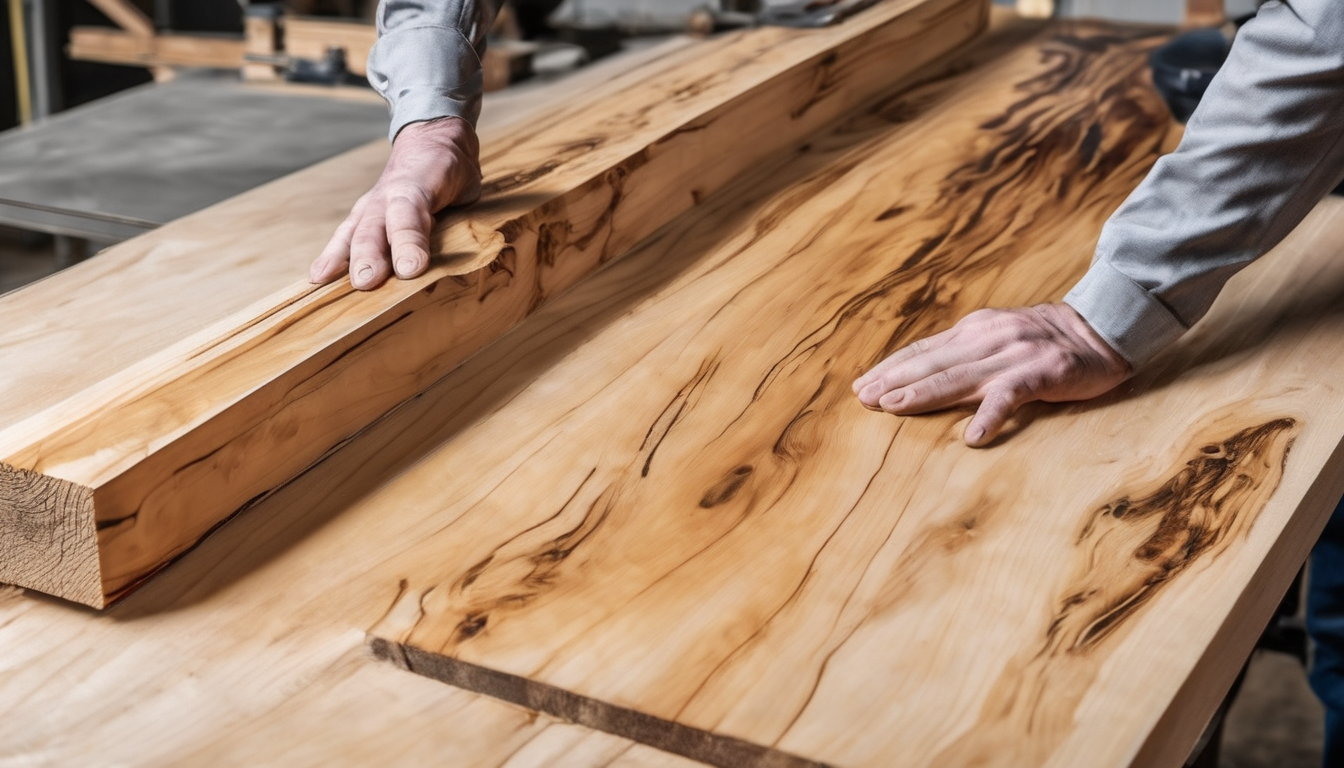

Preparing and sealing timber correctly is the most important stage when you want a flawless epoxy finish. How to Prepare and Seal Timber Before Epoxy Resin Pouring affects adhesion, bubble control, delamination risk and the long‑term clarity of your tabletop or worktop; this guide gives a nine‑step, workshop‑tested method you can follow today.
Introduction & why this matters
How to Prepare and Seal Timber Before Epoxy Resin Pouring is the foundation of any successful resin project; poor preparation causes trapped bubbles, ambering, poor adhesion and eventual delamination. Follow a deliberate process — drying, cleaning, stabilising, sealing — to save time and money, and to produce a glass‑clear, durable surface for river tables, worktops and tabletops.
Prepare And Seal Timber Before Epoxy Resin Pouring: Materials & requirements
- Epoxy resin (tabletop or deep pour type as required) and recommended hardener
- Thin epoxy or resin product for seal/prime coat (same brand where possible)
- Associate consumables: disposable mixing pots, stir sticks, calibrated scales
- Abrasives: 80–400 grit sandpaper, sanding block, random orbital sander
- Vacuum, tack cloths and denatured alcohol or acetone for cleaning
- Fillers: clear epoxy or polyester filler, wood splice timber, epoxy paste for repairs
- Heat source: propane torch (with care) or hot air gun, heat lamp
- Moisture meter (pin or pinless), hygrometer and thermometer for workshop
- Masking tape, silicone or silicone release tape for forms, clamps and protective gloves
- Personal protective equipment: nitrile gloves, respirator suitable for solvents/epoxy
Prepare And Seal Timber Before Epoxy Resin Pouring – Step 1: Ensure the timber is dry and dimensionally stable
How to Prepare and Seal Timber Before Epoxy Resin Pouring starts by confirming timber moisture content (MC). Use a moisture meter — target MC 6–10% for indoor furniture in the UK; for reclaimed or green timber, kiln‑dry or delay work until MC is stable. Timber that moves after pouring will crack epoxy or cause edge lifting.
Measure at several points including the thickest section and near knots; if variance exceeds 2–3%, wait and acclimatise the timber in your workshop until stable.
Prepare And Seal Timber Before Epoxy Resin Pouring – Step 2: Clean, remove loose material and inspect
Remove bark, loose cambium, old adhesives and foreign matter. How to Prepare and Seal Timber Before Epoxy Resin Pouring means a contaminant‑free surface; vacuum and wipe with denatured alcohol or acetone to remove oils, tannins or dust. Inspect for insect holes, active rot or large voids that need structural repair before sealing.
Step 3: Sand and level surfaces
Sanding creates a uniform surface for adhesion. Start with 80–120 grit to level high spots, then 180–240 grit to smooth. Always sand with the grain and remove pencil/marker lines used to mark defects. How to Prepare and Seal Timber Before Epoxy Resin Pouring requires removing any protruding nails or staples and ensuring the edges you plan to seal are even and scribed to the form if fitting into a mould.
Step 4: Fill voids, knots and rot — correct methods
Small knots or pinholes can outgas and create bubbles under resin. For non‑structural voids use a thin slurry of epoxy and filler or a coloured paste that matches the timber if aesthetics matter. For structural rot or large missing sections perform a splice repair with new timber or stabilise using epoxy consolidation techniques. How to Prepare and Seal Timber Before Epoxy Resin Pouring includes pre‑filling large cavities so the main pour won’t trap air.
Tip: for live‑edge river tables, fill large edge gaps loosely with a sacrificial backing pour or use tape to form a temporary dam before a seal coat.
Step 5: Seal edges and the underside
Timber releases moisture and air from all faces. Seal the underside and edges before the top surface; this prevents moisture migration and bubble formation during the top pour. Apply a thin coat of compatible seal epoxy or even shellac for a temporary barrier if you’ll be waiting before the main pour. How to Prepare and Seal Timber Before Epoxy Resin Pouring is incomplete if you only seal the top — always do edges and underside.
Step 6: Apply a thin epoxy seal (priming coat)
Applying a thin priming coat of the same epoxy brand locks in air and tannins and gives better bonding for thicker pours. Mix a small batch to the correct ratio, apply a 0.2–0.5 mm coat with a disposable brush or roller, and use a heat gun to pop any surface bubbles immediately. How to Prepare and Seal Timber Before Epoxy Resin Pouring usually recommends a tacky priming coat — when the coat is tacky (wipe test) you can pour the next layer; if fully cured, sand lightly (220–320 grit) and remove dust.
Use the manufacturer’s guidance: some deep‑pour systems require a compatible primer; using the same resin brand reduces risk of cross‑compatibility issues.
Step 7: Check workshop conditions — humidity & temperature
Resin performs best in controlled conditions. How to Prepare and Seal Timber Before Epoxy Resin Pouring requires a stable workshop temperature between 18–24°C and relative humidity below 60% to reduce amine blush and condensation. Use a hygrometer; avoid pouring when rain and rapid temperature swings (common in coastal and West Country winters) may shift moisture content or cause condensation on cold timber.
Step 8: How to prevent and remove bubbles
Bubbles usually come from trapped air in the wood or from mixing. To prevent them, pre‑seal porous areas so air cannot escape during the main pour, mix resin slowly and consistently to minimise vortexing, and allow mixed resin to rest briefly to let microbubbles rise. How to Prepare and Seal Timber Before Epoxy Resin Pouring includes use of a heat gun or propane torch to pass briefly over the surface after pouring to pop bubbles; work carefully to avoid overheating the epoxy (keep temperature below manufacturer max, often ~40–50°C surface).
For stubborn bubbles in deep pours consider vacuum degassing the mixed resin (professional shops) or applying the resin in thinner layers.
Step 9: Final preparation before your main epoxy pour
Before the big pour recheck that the priming coat is tacky or properly sanded and cleaned; ensure the form is sealed and level, clamps and bracing secure, and that the timber is fixed so it cannot float or shift during the pour. How to Prepare and Seal Timber Before Epoxy Resin Pouring finishes with a quick dust removal: vacuum, tack cloth and wipe with solvent if needed.
Finally, calculate volume accurately (measure cavity depth and area) and mix epoxy in manageable batches at the correct ratio. For deep pours work in stages and allow each layer to reach the recommended recoat window (tacky but not fully cured) or fully cure and sand between layers following the resin manufacturer’s instructions.
Expert tips & local considerations (Bristol region)
- Local climate note: In Bristol, Somerset and surrounding West Country areas high humidity and cooler winters can increase wood MC; store slabs in a heated, ventilated workshop to stabilise before work.
- Product matching: Use the same brand for seal coat and main pour when possible — manufacturers test compatibility within their system.
- Food‑safe worktops: For kitchen worktops select a NSF/food‑safe rated topcoat or use certified food‑safe epoxy and follow cure times strictly before contact with food; check manufacturer data sheets for suitability.
- Repairability: If future repairs are likely, leave a small recessed lip under the slab edges to allow sanding without hitting join edges.
- Costs: Expect to pay roughly £200–£600 for good quality tabletop epoxy and consumables per medium table project, though prices vary by brand and volume required (estimate example only).
Conclusion
How to Prepare and Seal Timber Before Epoxy Resin Pouring is a deliberate sequence: ensure dry, stable timber, clean and sand, repair and fill, seal edges and underside, apply a thin primer coat, control workshop climate, and finally prevent bubbles during the pour. Follow these nine essential steps and you’ll greatly reduce the common problems — bubbles, delamination and discolouration — that ruin resin tabletops and worktops.
Key takeaways
- Always measure moisture and stabilise timber before work.
- Seal all faces and use a primer coat to trap air and tannins.
- Control workshop temperature and humidity for consistent cures.
- Prevent bubbles by slow mixing, resting mixed resin and using heat to pop bubbles.
- Match products when possible and follow manufacturer recoat windows.
